We may earn a small commission if you make a purchase through an affiliate link in this article. As an Amazon Associate we earn from qualifying purchases.
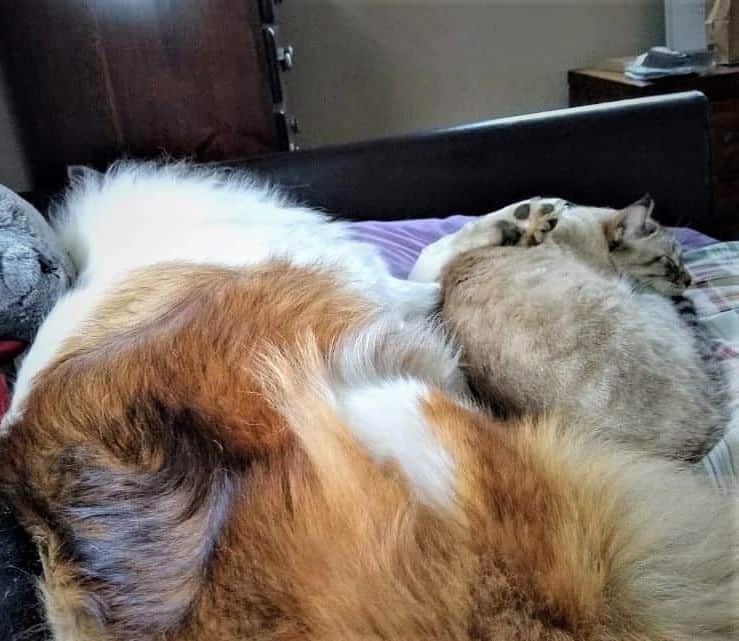
Are Rough Collies good with cats? Usually, yes. Most Rough Collies are gentle, people-focused dogs that can live happily with a cat, especially when they’re introduced carefully. But Collies are herding dogs, and some will want to chase, circle, or “manage” the cat. Here’s what to expect and how to set up a peaceful multi-pet home.
In this post:
- So, Are Rough Collies Good With Cats?
- How to Introduce a Rough Collie to a Cat
- Tips for a Harmonious Multi-Pet Household
- Handling Problems
- Keeping Both Pets Healthy
- Before You Add a Collie to a Cat Household
- Frequently Asked Questions
So, Are Rough Collies Good With Cats?
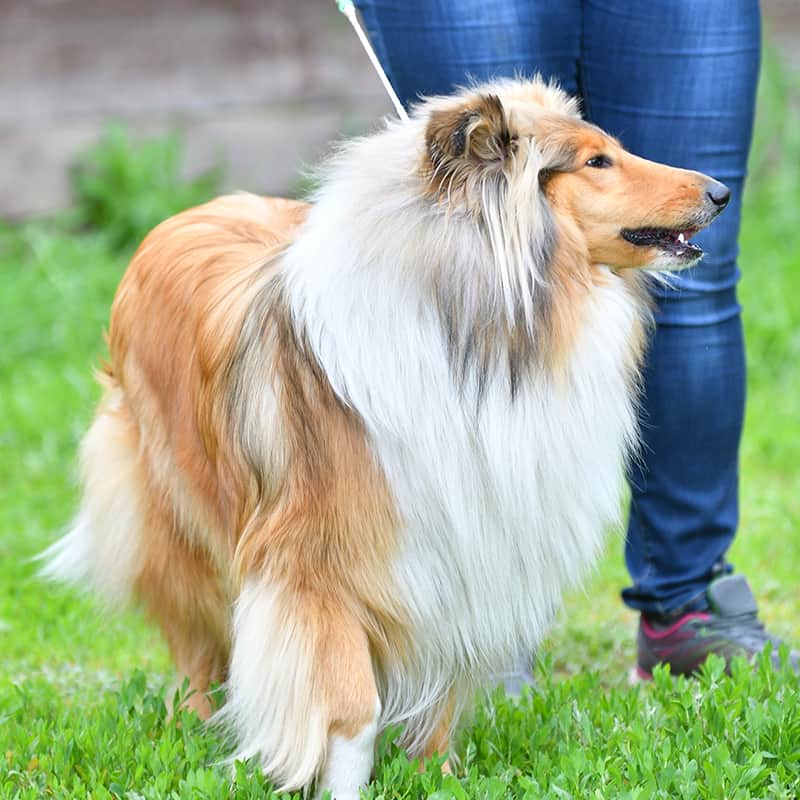
Rough Collies are known for a gentle, sensitive temperament, and many get along well with cats. Some become real friends. Emily Sowulewski, a former Collie Chatter writer, wrote about her household cat Bobcat in her post about Vakaa. She described him as “almost more our dogs’ pet than our pet,” and noted that “Yoshi and Bobcat cuddle the most.”
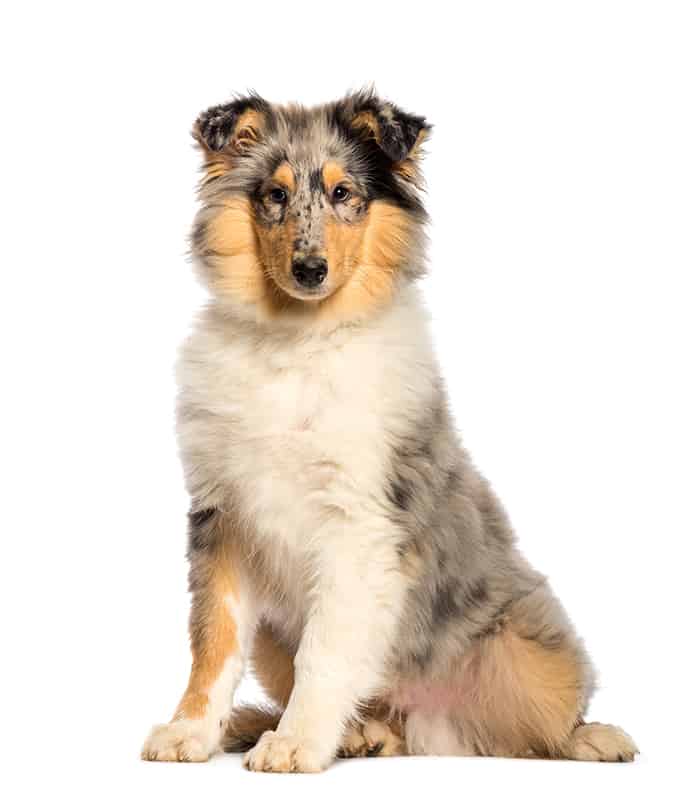
Every dog is an individual, though, and no breed comes with a guarantee. Rough Collies, like Border Collies, have strong herding instincts. That drive isn’t aggression, but it can show up as staring, chasing, or nipping, which most cats don’t appreciate. Training and supervision usually keep it in check.

How to Introduce a Rough Collie to a Cat
A slow, calm introduction is the single biggest factor in how things go.
Start Young if You Can
Puppies are usually more adaptable and open to new experiences, so introducing a Rough Collie puppy to a cat often goes smoothly. Adult Collies can learn to live with cats too. It may just take more patience.
Keep First Meetings Controlled
Let the dog and cat see and smell each other from a safe distance, with a baby gate, a pen, or the dog on leash. Make sure the cat can always get away to somewhere high or to a dog-free room. Close the distance gradually, over days or weeks, as both animals stay relaxed.


Reward Calm Behavior
Every time your Collie looks at the cat and stays calm, reward it with praise or a small treat. You want your dog to learn that the cat predicts good things, and that calm behavior around the cat pays.

Supervise Everything at First
Watch every interaction early on so you can step in at the first sign of chasing, stiff body language, hissing, or hiding. As both pets relax, you can gradually give them more freedom together.

Tips for a Harmonious Multi-Pet Household
Give Each Pet Its Own Space
Cats need dog-free places to eat, sleep, and use the litter box. Your Collie needs its own bed and a place to rest undisturbed. Separate spaces prevent a lot of squabbles, and they keep the dog out of the cat food and the litter box.


Keep Your Collie Busy
A well-exercised, mentally stimulated Collie is much less likely to go looking for entertainment, like herding the cat. Daily walks, play, and short training sessions help a lot.
Train “Leave It” and “Settle”
A solid “leave it,” “come,” and “settle on your mat” give you a way to call your Collie off the cat before things escalate. Practice them when the cat isn’t around first, then with the cat at a distance.
Watch Playtime
Some Collies and cats play together. Keep an eye on it. If play gets too rough, or one animal is clearly not enjoying it, calmly interrupt and redirect.
Handling Problems
Chasing or Nipping
Interrupt chasing right away with a calm “leave it” and redirect your Collie to a toy or a task, then reward it. Don’t let chasing become a game. Every chase makes the next one more likely.
Ongoing Tension
If things stay tense, go back a step. Keep the pets separated with gates or separate rooms when you can’t supervise, and work on calm exposure again.
Get Help When You Need It
If you’re struggling, a professional trainer or animal behaviorist can help. Also watch your cat. A cat that stops eating, hides constantly, or goes outside the litter box is stressed and may need a vet visit.
Keeping Both Pets Healthy
Regular Vet Care
Keep up with checkups, vaccines, and parasite prevention for both pets. For your Collie, be aware that many Collies carry the MDR1 gene mutation. Read our guide to parasite protection for dogs with the MDR1 gene and talk to your vet about which products are safe.
Good Nutrition
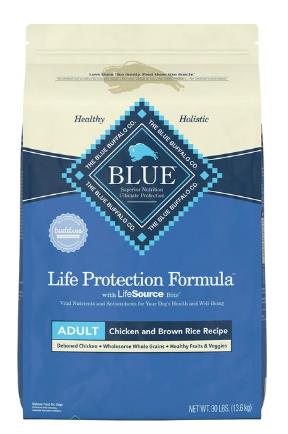
Feed each pet a complete, balanced diet made for its species and life stage, and keep dog food and cat food separate.
Blue Buffalo
Grooming
Regular grooming matters for Collies: brushing, nail trims, and dental care. It’s also a good time to check for lumps, bumps, and skin problems.



Before You Add a Collie to a Cat Household
Think honestly about these before you bring a Rough Collie home:
- Your cat’s personality. Some cats take dogs in stride. Others are easily stressed or have a history of fighting with dogs.
- Your lifestyle. Collies need daily exercise, company, and mental stimulation.
- Your time for training. Introductions and training take weeks, not days.
- Your long-term commitment. A Collie is a big commitment of time, effort, and money. Make sure you can give every pet in the house what it needs.
Frequently Asked Questions
Will my Rough Collie try to herd my cat?
It might. Herding instinct is normal in Collies. Redirect it early with training and plenty of exercise, and make sure the cat always has an escape route.
Is it easier to bring a kitten into a home with a Collie?
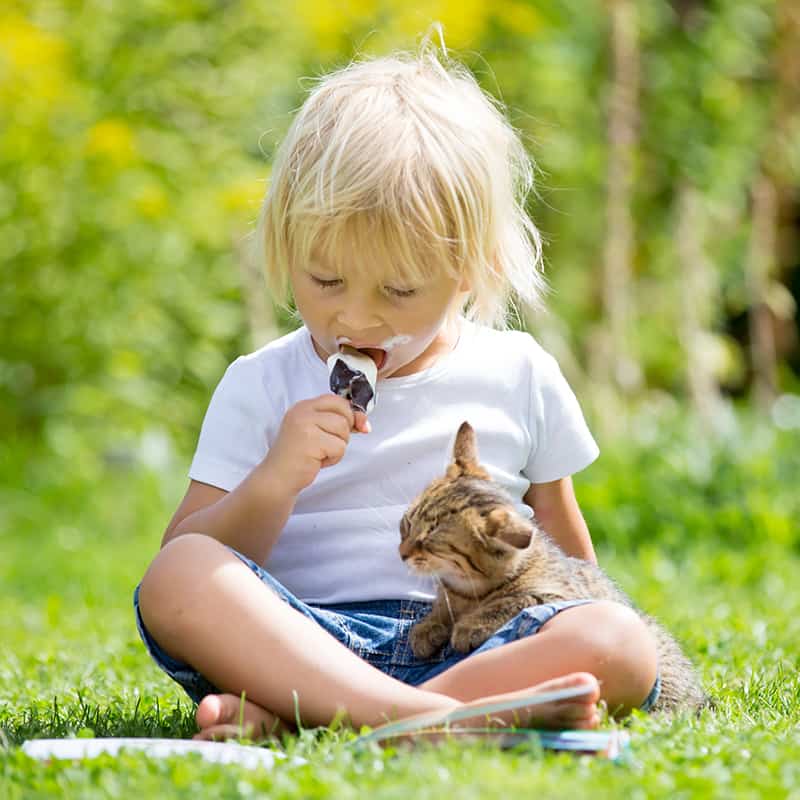
Often, yes, because kittens tend to be adaptable. Supervise closely, though. A kitten is small and fragile, and even a gentle dog can hurt one by accident during play.
Are Rough Collies good with other pets too?
Most get along well with other dogs, and many live happily with cats. See 5 Reasons Rough Collies Make Great Pets for more about their temperament. And for a fun read, don’t miss The Collies Who Rescue Cats.
The Bottom Line
Are Rough Collies good with cats? Usually, yes. Rough Collies are gentle dogs that often live happily with cats, as long as introductions are slow and herding instincts are managed. Give each pet its own space, reward calm behavior, and supervise until you’re sure they’ve worked things out. If you’re looking for a puppy, start with our U.S. Collie breeder directory.

Other Articles

Do Rough Collies Like to Cuddle?
Are Collies Protective?