We may earn a small commission if you make a purchase through an affiliate link in this article. As an Amazon Associate we earn from qualifying purchases.
What are Collies known for? Their beauty, brains, and devotion, plus a certain famous TV dog. Collies are gentle, intelligent herding dogs that bond closely with their families, and thanks to Lassie they’re one of the most recognizable breeds in the world. Here’s a look at what makes a Collie a Collie: its looks, temperament, working history, place in pop culture, health, and what it’s like to live with one.
In this post:
- Looks: Coat, Size, and That Famous Mane
- Temperament and Personality
- A Working History
- Collies in Popular Culture
- Collies as Family Pets
- Health Issues to Know About
- Finding a Collie
- Frequently Asked Questions
Looks: Coat, Size, and That Famous Mane
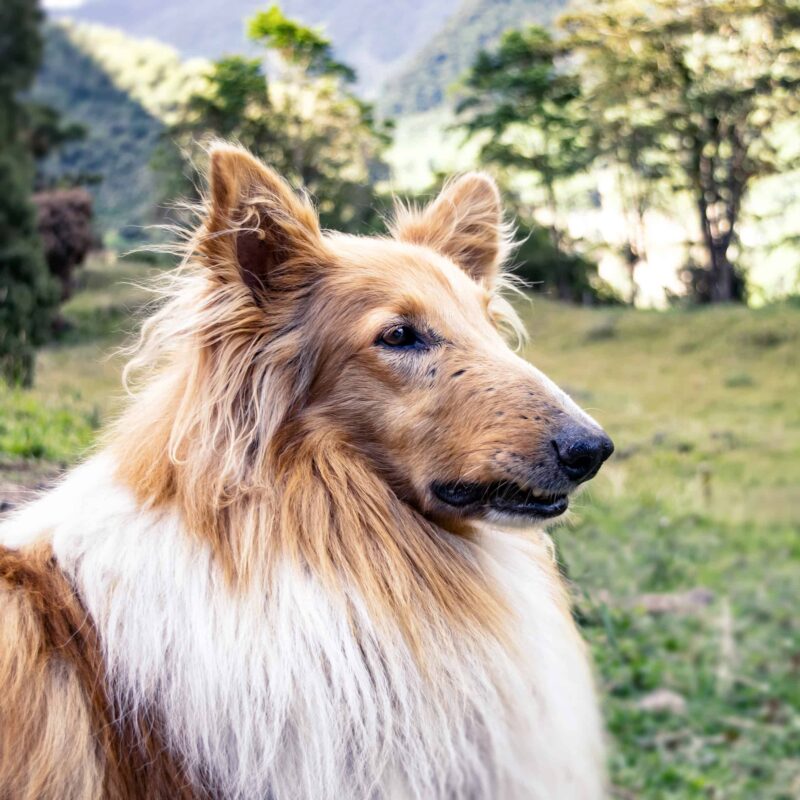
Collies are medium-to-large dogs with a graceful, athletic build. Under the AKC breed standard, males stand 24 to 26 inches at the shoulder and weigh 60 to 75 pounds, and females stand 22 to 24 inches and weigh 50 to 65 pounds.
They come in two coat types:
- Rough Collies have a long, abundant double coat and the famous full mane around the neck and chest. The coat needs regular brushing to stay in good shape.
- Smooth Collies have a short, dense double coat that’s much easier to groom, though it still sheds. (More in Are Smooth Collies Rare?)
Both come in sable and white, tricolor, blue merle, and white. Collies are also known for their expression: almond-shaped eyes (usually dark, though blue merles can have blue or partly blue eyes) and ears that stand partly up with the tips folding forward.

Temperament and Personality
Collies are known for being friendly, gentle, and intelligent. They learn quickly and do well in obedience, agility, herding, and other dog sports. They respond best to kind, reward-based training.
They’re also deeply loyal. Most want to be wherever their people are, and many are watchful protectors who will bark to let you know something’s up. That’s alertness, not aggression. Collies are not an aggressive breed.
Collies are usually good with children, patient and gentle, though some try to herd them now and then. They’re sensitive and tend to pick up on their owners’ moods, so a calm, stable home and consistent training help them thrive.
A Working History
Collies come from the British Isles, where they were bred to herd sheep in Scotland and northern England. They typically move livestock with their gaze and body language rather than force.
Their smarts and devotion have taken Collies into many other jobs too, including search and rescue, therapy, and service work. Emily Sowulewski, a former Collie Chatter writer, trained her Rough Collie Gus herself, and the two passed the Therapy Dogs International (TDI) certification evaluation together. His son Vakaa went on to train as her mobility service dog. Emily also cautioned that, although Collies are sometimes grouped among the “Fab Four” service dog breeds, she personally “would not recommend them for most handlers – particularly not a first-time handler or someone who has never owned/worked with a herding breed.”
Today some Collies still work livestock or compete in herding trials. Plenty of pet Collies keep the instinct too, which is why you may see yours try to round up the kids, the cat, or you.

Collies in Popular Culture
In the mid-1800s, Queen Victoria became a fan of the breed after seeing Collies in Scotland. They became fashionable with the upper classes and took off in the show ring, and early standards for the Rough Collie’s appearance were written around this time.
Then came Lassie. The most famous Collie of all time first appeared in Eric Knight’s 1940 novel “Lassie Come-Home.” Lassie went on to star in films and a long-running TV series, and the character made the Collie a symbol of loyalty and bravery. Demand for Collies soared. To this day, many people simply call Rough Collies “Lassie dogs.”
Real Collies have their own hero stories too, like Bobbie the Collie, the real “Lassie Come-Home”.
In the U.S., the Collie Club of America (CCA) was founded in 1886, making it one of the oldest breed clubs associated with the American Kennel Club. It works to promote the welfare of the breed and is a good resource for owners and future owners.
Collies as Family Pets
Collies can make wonderful family dogs, but they have real needs.
- Exercise: Rough and Smooth Collies are moderate-energy dogs that need daily walks, play, and mental stimulation. Border Collies usually need a lot more. See Are Rough Collies Lazy? for what that looks like day to day.
- Grooming: Rough Collies need regular brushing to prevent mats and manage shedding. Smooth Collies are easier but still shed. Our grooming tools guide covers the basics.
- Company: Collies bond closely with their families and don’t enjoy long days alone.
- Socialization and training: Most Collies get along with kids and other pets, but early socialization matters. Some may want to chase or herd smaller animals, so supervise at first.

Health Issues to Know About
Collies are generally healthy, with a typical lifespan of around 12 to 14 years. Like any breed, they have some health concerns worth knowing about. Talk to your vet and ask breeders about testing.
MDR1 Drug Sensitivity
Many Collies carry a mutation in the MDR1 gene that makes them sensitive to certain common medications. A simple DNA test can tell you your dog’s status. Always tell your vet if your Collie is MDR1-positive or untested. Our post on parasite protection for dogs with the MDR1 gene explains more.
Collie Eye Anomaly (CEA)
An inherited eye condition that can range from mild to vision-threatening. DNA testing and eye exams help breeders reduce the risk.
Progressive Retinal Atrophy (PRA)
A degenerative eye disease that can lead to blindness. Testing and regular eye checks help catch it.
Hip Dysplasia
A condition in which the hip joint doesn’t develop properly, which can lead to arthritis. Responsible breeding and keeping your dog at a healthy weight help.
Regular vet care, a balanced diet, and plenty of exercise go a long way toward keeping any Collie healthy.
Finding a Collie
If you’ve decided a Collie is right for you, take your time finding one.
Breeders: A good breeder health-tests their dogs, raises puppies with plenty of socialization, and is happy to answer your questions and let you meet the parents. Start with our U.S. Collie breeder directory.
Rescue: Many wonderful Collies end up in rescue through no fault of their own. Adopting gives a dog a second chance, and many rescues know their dogs well enough to help you find a good match. See our U.S. Collie rescue directory.
Frequently Asked Questions
Are Collies easy to train?
Generally, yes. They’re smart and eager to please people they trust. Harsh methods backfire with this sensitive breed, so stick with positive reinforcement.
Do Collies bark a lot?
Many are vocal, especially as watchdogs. Training helps. See Do Rough Collies Bark a Lot?.
What’s the difference between a Rough Collie and a Border Collie?
They’re different breeds. Border Collies are generally smaller and much higher-energy working dogs, while Rough and Smooth Collies are larger and more moderate in energy. See Things to Consider Before Getting a Border Collie.
The Bottom Line
What are Collies known for? Collies are known for their intelligence, loyalty, gentle nature, and striking looks, and, of course, for Lassie. If you can give one daily exercise, regular grooming, kind training, and plenty of company, a Collie can be a wonderful family dog. For more breed basics, read What Is a Rough Collie?.

Other Articles

Are Smooth Collies Rare?
Are Rough Collies Good Running Partners