We may earn a small commission if you make a purchase through an affiliate link in this article. As an Amazon Associate we earn from qualifying purchases.
Introduction
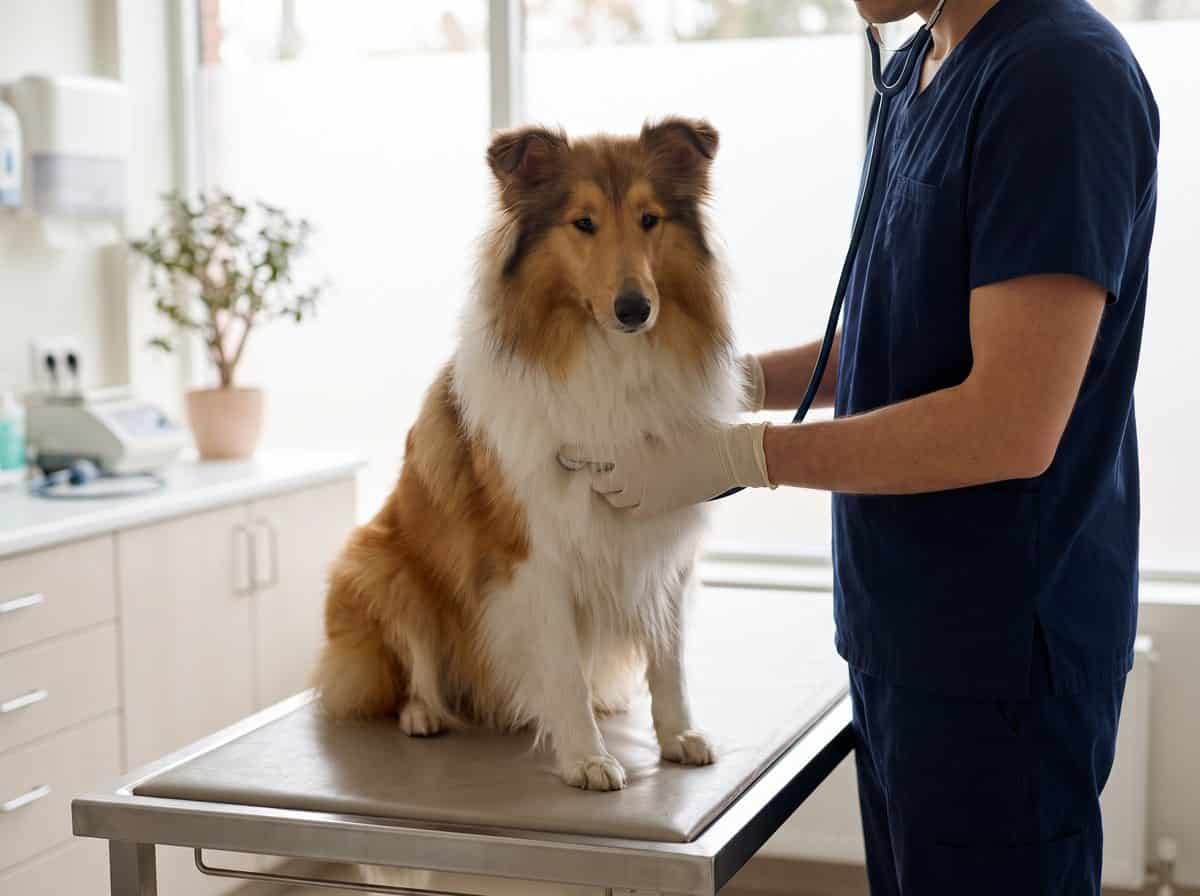
Collies are, on the whole, a relatively healthy breed. But like every purebred, they come with a known list of inherited conditions, and a few of them (eye disease, drug sensitivity, skin disease) are specific enough to Collies that it pays to plan ahead. Pet insurance is one way some owners budget for the unexpected. This guide explains how pet insurance generally works, why it can make sense for a Rough or Smooth Collie, when to enroll, and what to ask before you choose a policy.
Quick answer: Pet insurance can help Collie owners budget for accidents and illnesses, including breed-linked problems like Collie Eye Anomaly, dermatomyositis, hip dysplasia and bloat. Most policies exclude pre-existing conditions, so the best time to compare plans is while your Collie is a healthy puppy, before any diagnosis. Policies vary a lot, so always read the terms, waiting periods and exclusions before you enroll.
New to collies? Grab our free checklist.
Our free, printable New Collie Owner Checklist covers what to prepare before your collie comes home, the first week, the first three months, vet questions, grooming and feeding. Join the Collie Chatter newsletter and we’ll email it to you.
Why Collies Can Benefit From Pet Insurance
Collies are large dogs with long lifespans (about 12 to 14 years on average), so you are budgeting for a dog’s care over more than a decade. Large-dog vet care, from anesthesia to medication doses, generally costs more than it does for small dogs. On top of that, the breed has a handful of well-documented inherited conditions. Many owners never face a serious health problem, but if one comes up, an emergency surgery or a specialist workup can arrive with little warning.
Insurance doesn’t prevent any of that, and it isn’t the right call for every household. Some owners prefer to put money aside in a dedicated savings account instead. But if a large unexpected bill would force a hard decision, pet insurance is worth comparing while your Collie is young and healthy.
Disclosure: Collie Chatter may earn a commission if you get a quote or enroll through the Lemonade links on this page, at no extra cost to you.
If you want to see what a policy would look like for your dog, you can get a quote from Lemonade and compare it with other insurers. Check the policy terms for what is and isn’t covered.
Collie Health Issues to Keep in Mind
These are the breed-related conditions Collie Chatter has covered in more depth. Whether any of them would be covered depends entirely on the policy, your dog’s history, and timing, so ask each insurer directly about them.
- Collie Eye Anomaly (CEA): an inherited eye condition present from birth. Most affected dogs have mild forms, but severe cases can involve retinal detachment or bleeding. Because CEA is congenital and often diagnosed in puppyhood, ask how a policy treats hereditary and congenital conditions. See Collie Eye Anomaly.
- MDR1 drug sensitivity: a genetic mutation that makes certain drugs dangerous for affected dogs. A DNA test is the main cost; the risk is an emergency if a dog is given the wrong medication. See Parasite Protection for Dogs With the MDR1 Gene.
- Dermatomyositis (DMS): an inherited inflammatory skin and muscle disease seen in Collies and Shelties, often starting in young dogs, which can need ongoing management.
- Hip dysplasia: less common in Collies than in some large breeds, but it does occur. Some policies have special rules, waiting periods or exclusions for orthopedic conditions, so read them carefully.
- Bloat (gastric dilatation-volvulus): a life-threatening emergency in deep-chested breeds that usually needs immediate surgery.
- Progressive Retinal Atrophy (PRA) and Degenerative Myelopathy (DM): inherited conditions that DNA tests can screen for.
For an overview of all of these, read Rough Collie Health Problems. For everyday prevention, see Five Things You Can Do to Help Your Collie Live a Healthier Life.
How Pet Insurance Generally Works
Policies vary from company to company and plan to plan, so treat this as a general guide and check the actual terms of any policy you’re considering.
- Premium: what you pay each month or year. It usually depends on your dog’s breed, age, location, and the options you choose.
- Deductible: the amount you pay toward eligible vet bills before the policy starts reimbursing. Most plans use an annual deductible; some use per-condition deductibles.
- Reimbursement rate: the percentage of an eligible bill the insurer pays back after the deductible.
- Annual or lifetime limit: the maximum the policy will pay in a year or over the dog’s life. Some plans offer unlimited options.
- How you’re paid: with most US pet insurance, you pay the vet first and submit a claim for reimbursement. Some insurers can pay certain vets directly.
- Waiting periods: coverage typically doesn’t start the day you enroll. Waiting periods are often different for accidents, illnesses, and orthopedic conditions.
- Pre-existing conditions: conditions that showed signs or were diagnosed before coverage started (or during a waiting period) are generally excluded. Some insurers treat “curable” pre-existing conditions differently after a symptom-free period.
Accident, Illness and Wellness Coverage
- Accident-only plans generally cover injuries such as swallowed objects, broken bones, or bite wounds, but not illnesses.
- Accident and illness plans are the most common type. They generally cover injuries plus illnesses, which can include cancer, infections, and, depending on the policy, hereditary or congenital conditions.
- Wellness or preventive add-ons are optional extras on many plans that help with routine care like vaccines, checkups, and sometimes dental cleanings. Whether one pays off depends on your vet’s prices and the add-on’s limits.
For a breed like the Collie, the details that matter most are how a policy handles hereditary and congenital conditions, orthopedic conditions, and chronic conditions that need treatment year after year.
When to Get Pet Insurance for a Collie
Generally, the earlier the better. Because most policies exclude pre-existing conditions, enrolling while your Collie is a healthy puppy, before any diagnosis, gives you the best chance that later conditions will be eligible. A puppy’s first eye exam is a good example: if a problem is found before coverage starts, it may be treated as pre-existing.
A good time to compare policies is while you’re gathering puppy gear and booking the first vet visit. Our Collie Puppy Supplies list covers what else you’ll need. Waiting periods still apply, so don’t wait until something is wrong.
Adopting an adult or senior Collie? Insurance is still available from many insurers, though age limits, pricing and exclusions vary. Ask the rescue or previous owner for vet records so you know what might count as pre-existing. The US Collie Rescue Directory lists rescues by state.
Questions to Ask Any Pet Insurer
- Are hereditary and congenital conditions (like CEA and dermatomyositis) covered, and are there any breed-specific exclusions?
- How do you define a pre-existing condition, and can a “curable” condition become eligible later?
- What are the waiting periods for accidents, illnesses, and orthopedic conditions such as hip dysplasia?
- Is the deductible annual or per condition? What reimbursement and limit options are available?
- Are exam fees, prescription medications, specialist visits (such as a veterinary ophthalmologist) and emergency care included?
- Is DNA testing (for MDR1, CEA or DM) covered, or only treatment?
- Do premiums rise as my dog ages, and is there a maximum enrollment age?
- Do I need a vet exam or records before coverage starts?
- How are claims submitted, and how long does reimbursement usually take?
- Can I use any licensed vet, including emergency hospitals and specialists?
Get the answers in writing, or find them in the sample policy, rather than relying on marketing pages.
Is Pet Insurance Worth It for a Collie?
It depends on your budget and how you’d handle a large, unexpected vet bill. Pet insurance trades a predictable monthly cost for help with unpredictable ones. Some owners come out ahead and some don’t. If you’d rather self-insure, set up a dedicated savings fund and contribute to it every month. Either way, health-tested parents, a DNA-tested puppy, and good preventive care are the best investments in a Collie’s health.
If you’re leaning toward insurance, compare at least two or three insurers side by side. You can start by getting a quote from Lemonade.
Frequently Asked Questions
Is pet insurance worth it for Rough Collies?
It can be, especially if a large unexpected vet bill would be hard to cover. It’s a personal budgeting decision. Compare policies, or set up a dedicated savings fund instead.
Does pet insurance cover hereditary conditions like Collie Eye Anomaly?
Some policies cover hereditary and congenital conditions and some limit or exclude them, and a condition found before coverage starts is usually treated as pre-existing. Check each policy’s terms.
Does pet insurance cover MDR1 testing?
DNA tests are often treated as routine or elective and may not be covered by accident and illness plans. Ask the insurer, and check whether a wellness add-on helps.
When should I get pet insurance for a Collie puppy?
Ideally as soon as you bring your puppy home and before any diagnosis, since waiting periods apply and pre-existing conditions are generally excluded.
Can I get pet insurance for an older Collie?
Many insurers enroll adult and senior dogs, but age limits, pricing and exclusions vary, so ask before you apply.
Do I have to use a specific vet?
Most US pet insurance lets you visit any licensed vet and then submit a claim, but confirm this in the policy.
You Might Also Like
Larry Brown
Larry Brown is an avid Collie lover. He writes about the breed from the yard and the driveway, not from a show catalog.