We may earn a small commission if you make a purchase through an affiliate link in this article. As an Amazon Associate we earn from qualifying purchases.
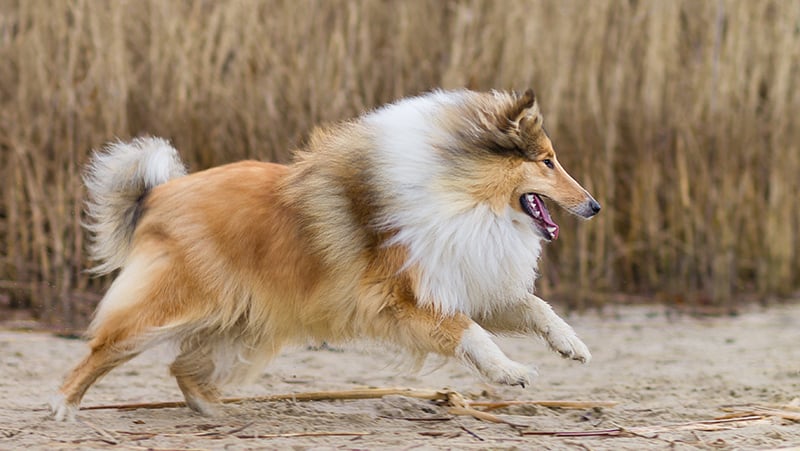
Are Rough Collies lazy? No. Rough Collies have a reputation for being laid-back, and many are happy to lounge around the house. But they’re a working breed with a real work ethic. They don’t have the nonstop drive of a Border Collie, but a Rough Collie with a job to do is anything but lazy. Here’s where the myth comes from, how much activity a Collie actually needs, and what it might mean if yours seems sluggish.

In this post:
- So, Are Rough Collies Lazy?
- A Working Breed at Heart
- How Much Exercise Does a Rough Collie Need?
- Encouraging Healthy Habits
- When “Lazy” Is Really a Health Issue
- Frequently Asked Questions
So, Are Rough Collies Lazy?
Here’s the short version:
- They have an “off switch.” Most Collies settle nicely indoors once their needs are met. That calm is often mistaken for laziness.
- They match your energy. Many Collies are happy to hike when you hike and nap when you nap.
- They’re moderate, not low, energy. Compared with high-drive herding breeds, they need less, but they still need daily exercise and mental work.
A Collie that never seems interested in anything isn’t being lazy. It may be bored, overweight, too hot, or unwell. We’ll cover those below.
A Working Breed at Heart
Collies developed as herding dogs in Scotland and northern England, moving sheep and cattle for shepherds and farmers. Some historians believe their distant ancestors came to Britain with the Romans and mixed with local dogs. Early working Collies carried less coat than today’s show dogs and came in more varieties.
In the mid-1800s, Queen Victoria took a liking to the breed after seeing Collies in Scotland. They became fashionable, showed up at dog shows, and got their first written standards. Over time, breeding for looks changed the show Collie’s appearance, though some breeders still favor the older, farm-style type.
In the U.K., Rough and Smooth Collies are separate breeds. In the U.S., they’re one breed with two coat types, and both can be born in the same litter. Either way, they share the same temperament and a similar energy level.
What Collies Can Do
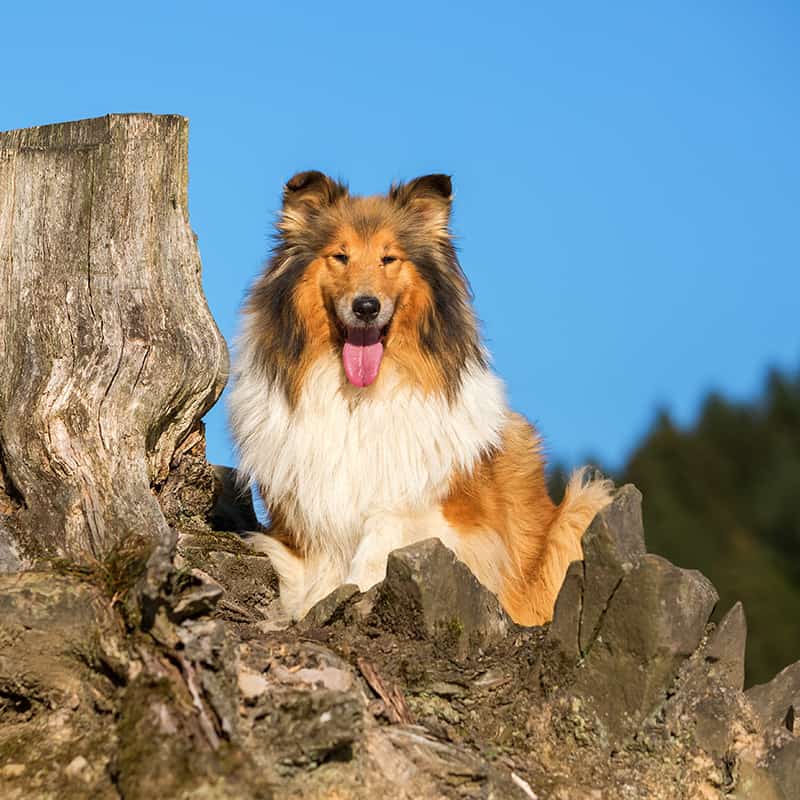
Given the chance, Rough and Smooth Collies are versatile athletes. You’ll find them in herding, agility, rally, fast CAT, and dock diving. Some work as farm dogs, service dogs, or even search and rescue dogs. Their intelligence and trainability are a big part of that. Individual drive varies, of course. Some Collies want a job every day, and others are content with a walk and a game.

How Much Exercise Does a Rough Collie Need?
Rough and Smooth Collies need less exercise than their workaholic cousins, the Border Collies, but they still need daily activity. A good target for most healthy adults is about an hour a day, split between walks and some more active play. Your vet can help you fine-tune that for your dog’s age and health.
Daily walks plus a chance to run in a safely fenced yard or park work for most Collies. Many enjoy chase games and tag with people or other dogs. Some love fetch. Emily Sowulewski, a former Collie Chatter writer, noted that her Yoshi would only play fetch indoors. Collies can live in apartments or condos if they get out to stretch their legs every day.
Rainy-Day Ideas
On bad-weather days, try hide-and-seek, a round of tug, or a cardboard box to shred. (A lot of Collies seem to love that.) In What Is a Rough Collie?, Emily wrote that she sometimes played inside with Yoshi on rainy days or when she wasn’t up to a walk. Tug toys that anchor to the floor or a tree let some dogs play on their own.


Puppies and Young Dogs
Puppies need exercise to build strong muscles and bones, but in short, gentle sessions that increase gradually. Don’t push a growing pup too hard. Ask your vet what’s appropriate as your puppy grows.
Remember that a dog who looks grown up isn’t mentally mature yet. “Puppy brain” can last well past the first birthday. Many dogs end up in rescue around a year old because owners expected them to have calmed down already. That’s like expecting a teenager to act like an adult. Many Collies really start to mature around age two. Patience pays off.
Emily wrote that when Yoshi was younger, two walks a day made her less inclined to boredom and destruction, and let the household sleep through the night. As Emily put it, “A tired dog is a good dog.”

Encouraging Healthy Habits
Make Walks Count
Daily walks are exercise, training time, and bonding time in one. And often it’s the Collie that gets the human moving, not the other way around.
Watch the Heat
With a thick double coat, a Collie can overheat faster than you’d expect. If your dog lags behind on a warm day, it may be hot, not lazy. Walk in the cooler parts of the day, bring water, and take breaks in the shade. Heavy panting, stumbling, or confusion can be signs of heatstroke, which is an emergency. For more, see Rough Collies and Florida heat.
Exercise the Brain Too
Mental work tires a Collie out as much as physical exercise. Puzzle toys, short training sessions, and “find it” games challenge their problem-solving skills. Reward effort with praise, play, or treats. What motivates each dog differs. Emily wrote that her Gus was motivated by lavish praise, while Yoshi was motivated by the promise of play.


When “Lazy” Is Really a Health Issue
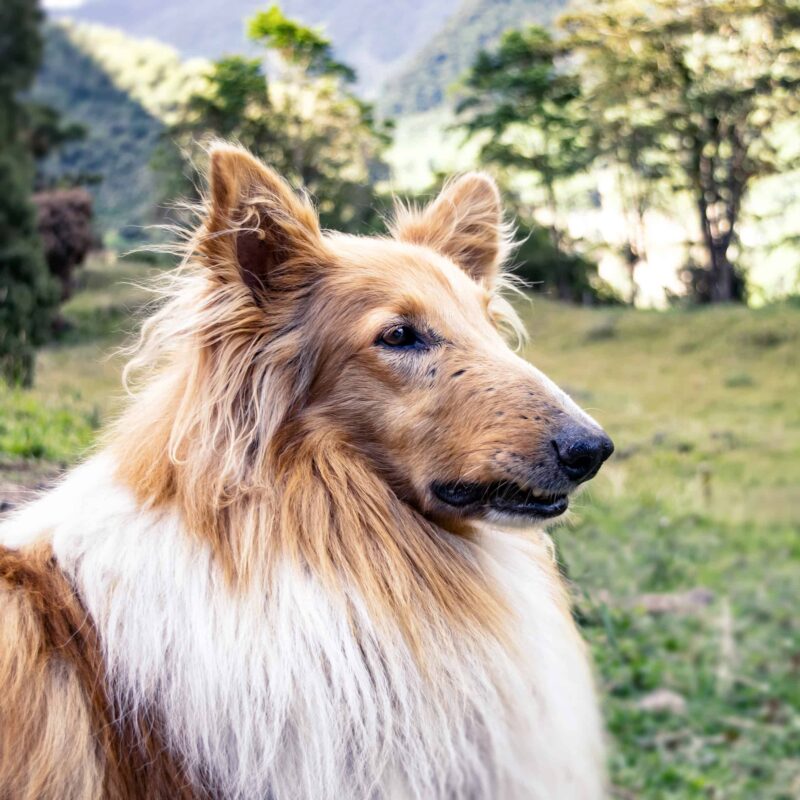
A Collie that seems unusually tired, slow, or uninterested is often telling you something.
Overfeeding and Extra Weight
Extra weight makes any dog sluggish, and obesity is linked to problems like joint pain and diabetes. Feed for your Collie’s age, size, activity level, and lifestyle, and count treats as part of the daily total.
A few habits that help:
- Make food a job. Collies are a working breed, and earning meals is satisfying for them. Use part of the daily kibble as training rewards on walks, then feed the rest at home.
- Skip free feeding. Leaving food out all day makes it easy for a dog to eat more than it needs and hard for you to notice appetite changes.
- Slow things down. Slow-feeder bowls and lick mats turn mealtime into enrichment.


Overfeeding can also show up in less obvious ways, like digestive upset. The pet food maker Burns has a list of signs of overfeeding worth reading. Any ongoing skin, ear, or digestive problem deserves a vet visit, since there are many possible causes.
How to Tell if Your Collie Is Overweight
From above, your Collie should have a visible waist. From the side, the belly should tuck up behind the ribs rather than hang in a straight line. That’s easy to see on a Smooth Collie and much harder under a Rough’s coat. With a Rough, go by feel: you should be able to feel the ribs easily with light pressure, a bit like feeling the bones on the back of your hand. Your vet can tell you your dog’s body condition score at the next checkup.
Boredom
A dog with nothing to do can look lazy or depressed. Sometimes it isn’t about the miles so much as a chance to sniff, explore, and read the neighborhood “pee-mail.” New routes, sniff walks, and short outings can perk a bored Collie right up.
Medical Causes
Lethargy isn’t normal for a Collie. Tiredness, weight gain, and a dull coat together can be signs of a thyroid problem, and many other conditions can cause low energy. If your Collie is exercised, fed sensibly, and still seems sluggish, or if its energy changes suddenly, see your vet. A blood test can check for thyroid issues.

Frequently Asked Questions
Are Rough Collies high energy?
They’re usually moderate energy. They need daily exercise and mental stimulation, but most settle calmly at home once they’ve had it.
Can a Rough Collie be a couch potato?
Most are happy to relax with you on a lazy day, as long as that isn’t every day. A Collie that never gets out will get bored, and may gain weight.
Why is my Collie suddenly lazy?
A sudden drop in energy can be caused by heat, pain, illness, or weight gain. If it lasts more than a day or two, or comes with other symptoms, call your vet.
The Bottom Line
Are Rough Collies lazy? No. Rough Collies are a moderate-energy working breed with a handy “off switch.” Give them daily exercise, something to think about, and sensible portions, and you’ll have a dog that’s happy to hike, play, or curl up at your feet. If yours seems unusually sluggish, look at weight, heat, boredom, and health, and check in with your vet.

Other Articles
Can Rough Collies Be Left Alone?
Do Rough Collies Like to Cuddle?